Carpenter in Tacoma, WA: Wood Rot, Structure & Finish Work
Tacoma Carpentry is a local residential carpentry shop serving homeowners searching for a carpenter near me in Tacoma and the surrounding areas including Lakewood, Puyallup, Sumner, and Bonney Lake. We work on the full span of residential carpentry: structural repair and framing, wood rot and insect damage restoration, and finish carpentry including trim, doors, cabinets, and custom built-ins. The homes here range from the Victorian and Craftsman houses of the North Slope Historic District and Stadium District, built between 1888 and 1929, to the early-1900s bungalows of Proctor and Old Town, the postwar ramblers across South Tacoma and McKinley Hill, and newer construction in Northeast Tacoma and the subdivisions of South Hill. Every one of these houses sits on the hills and bluffs above Commencement Bay under the Pacific Northwest's marine climate of heavy fall-through-spring rainfall, damp winters, and limited winter sun.
That climate and the age of much of our building stock create predictable conditions: wood members that have absorbed moisture over decades, sills and fascia that face the weather, and framing that has settled slowly into its final position. We know this building stock and the pathologies it develops. When you call (253) 322-2881 with a question about wood rot, termite damage, a soft floor, or finish carpentry work, you reach carpenters who have worked on these houses, not a call centre. We assess the damage honestly, explain what it means, and propose repair or replacement based on what the wood actually justifies. If you would like a free wood rot inspection, we are ready to help.
Why Wood Fails in Tacoma, and How We Read It
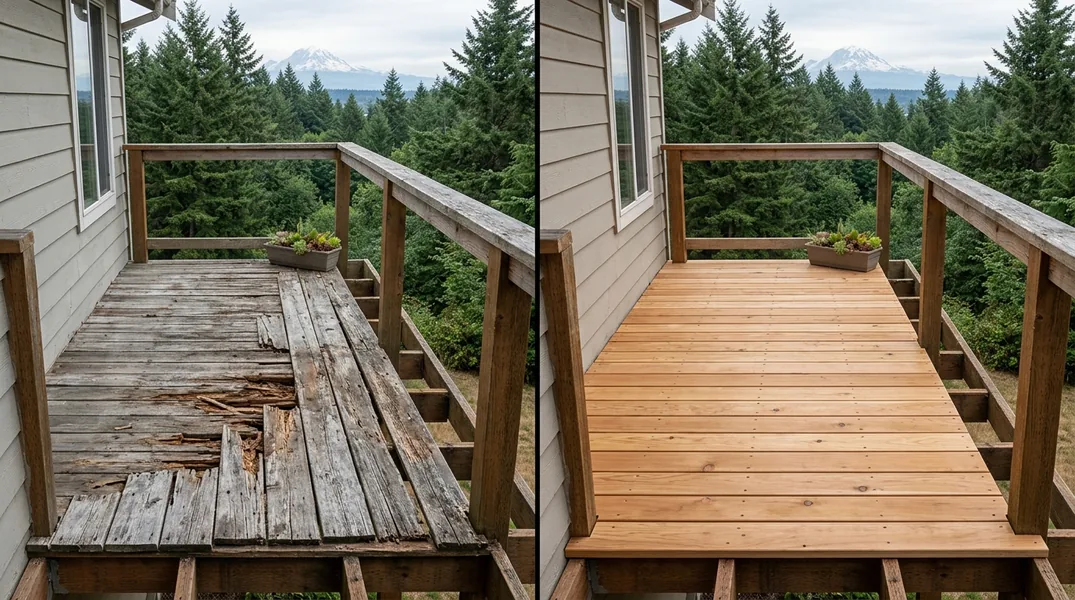
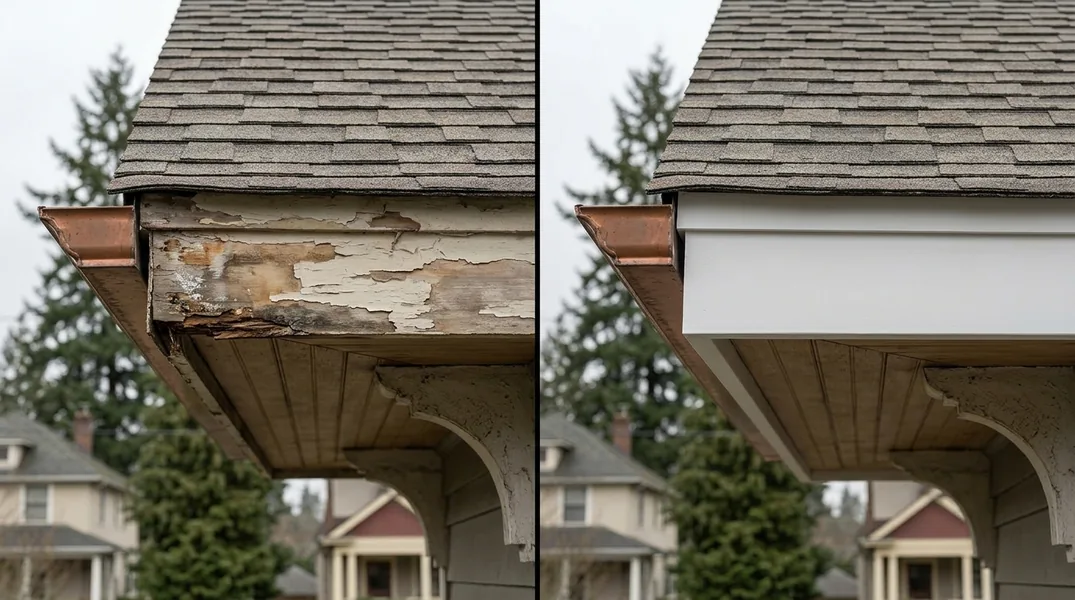
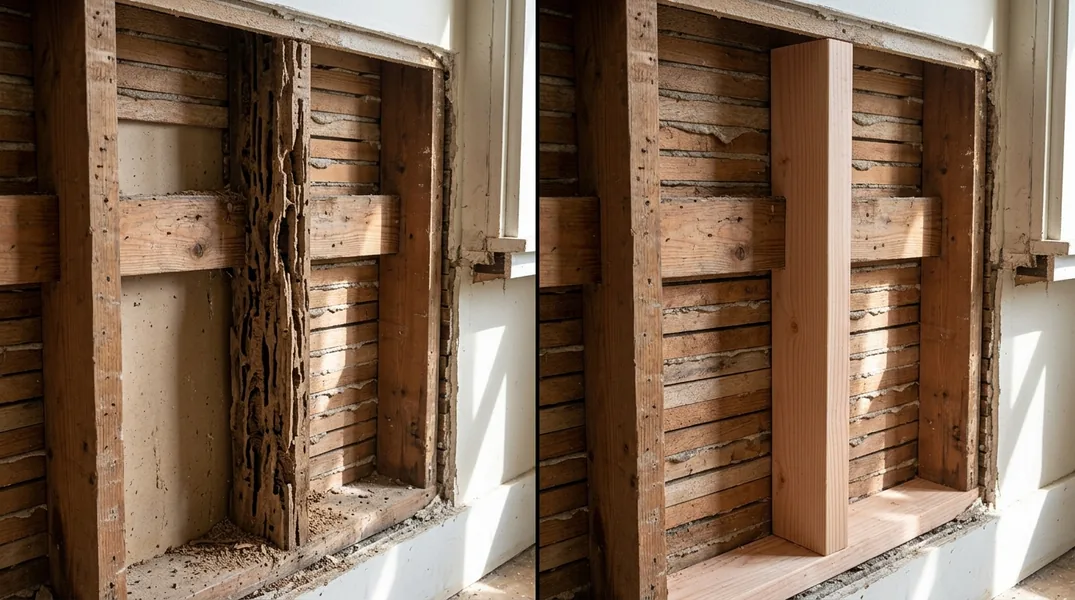
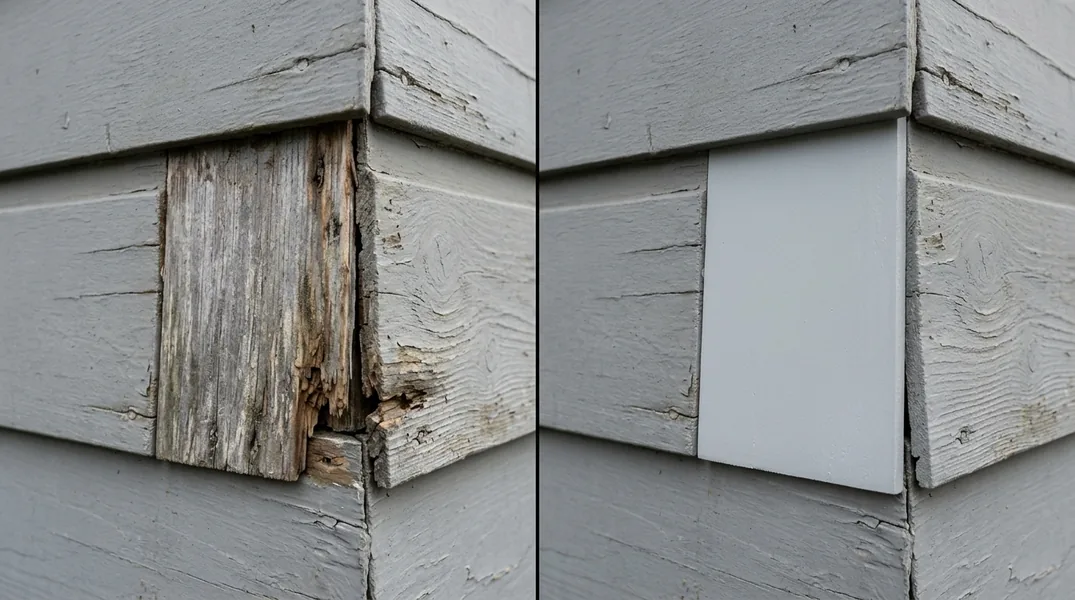
Wood fails in Tacoma for three main reasons, each with its own signature. Dry rot is a fungus that needs sustained moisture to grow, not standing water. The marine climate here provides exactly that: moisture in the air, rain from fall through spring, and wood surfaces that stay damp for weeks at a time. Dry rot typically starts where water sits longest: at sills and thresholds, around window frames, at deck ledgers, and in fascia and soffit joints that trap water. Wet rot works similarly but progresses faster in wood that is periodically soaked. Termite and beetle damage is different: the insects hollow out the interior of a member while the paint film on the surface stays intact, so a beam or joist can look sound and be structurally compromised inside.
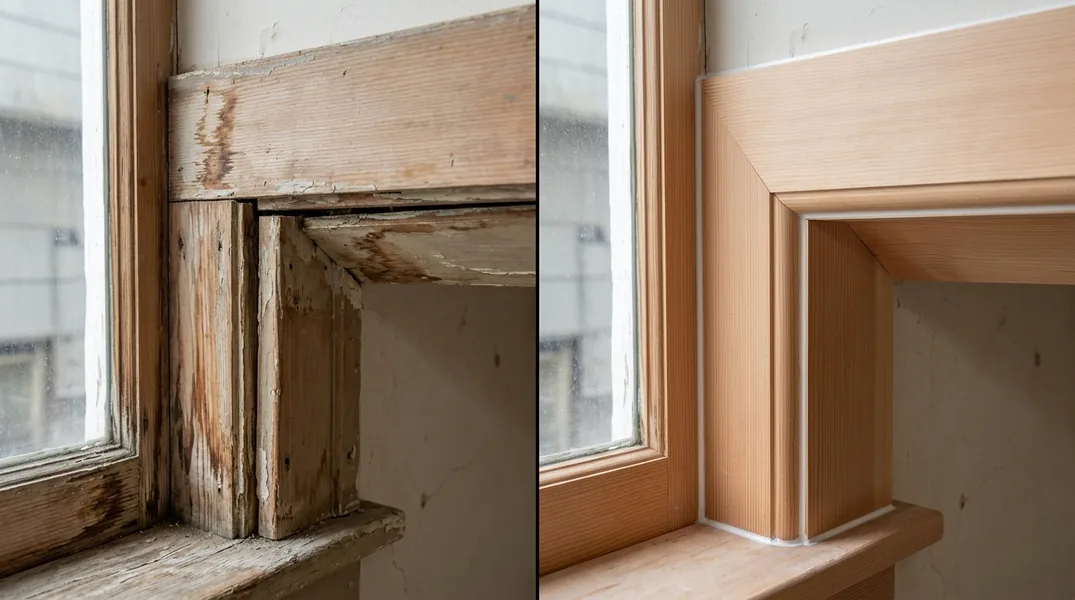
We assess all three by the same method: probing to find where sound wood begins, checking the framing and structure behind the visible surface, and tracing the water path that fed the decay. A member with cosmetic surface softness but sound wood underneath can be cut out and rebuilt with new wood fitted and fastened to the remaining sound section. A member that has lost too much of its cross-section must be replaced. The critical point is this: if the water source is not closed, the repair fails again. Filler over rot is not a repair. We work from your own pest inspection report when insects are involved, and we repair and replace the damaged wood. We do not treat, fumigate, or perform pest control, which is a separate regulated trade. Call (253) 322-2881 to describe what you have found, or schedule a free wood rot inspection so we can look at it in person and give you an honest diagnosis.
The difference between a real repair and a band-aid comes down to understanding the pathology and closing the water source. We explain what we find, what caused it, and whether the wood can stay or needs to come out. That honesty is how we work.
Structural Carpentry in Tacoma: Joists, Beams and Settling
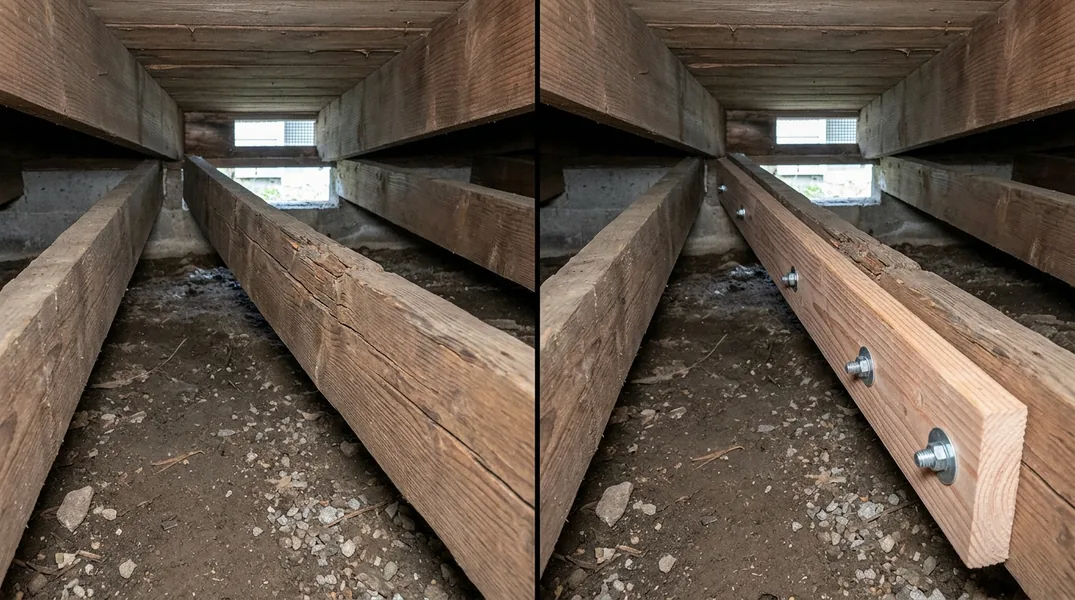
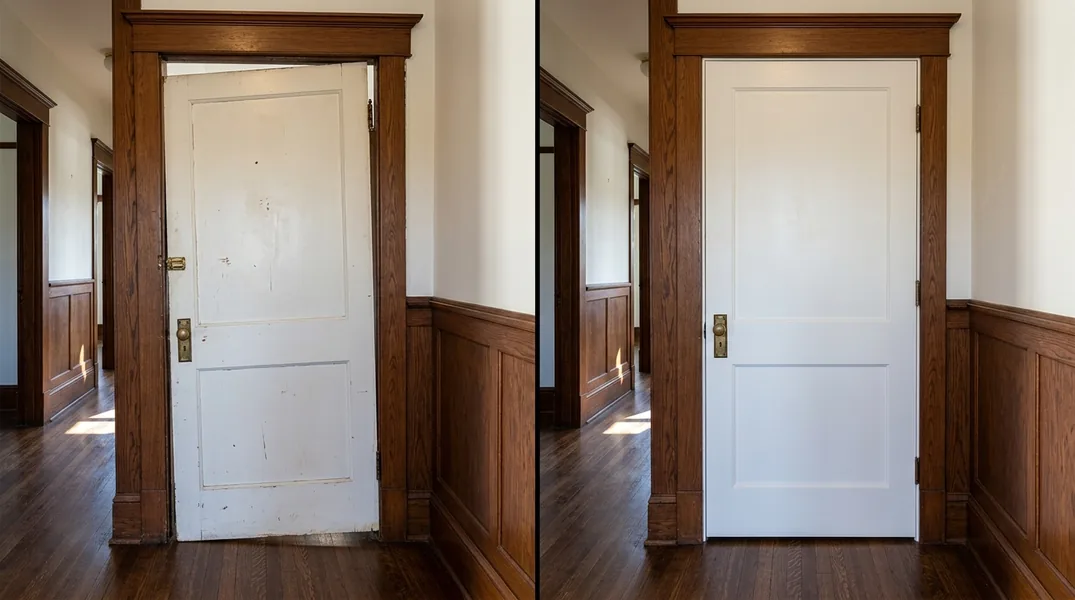
Structural carpentry in Tacoma homes means working with floor joists, subfloor, sill plates and rim joists, beams and headers, and sometimes load-bearing walls. A century-old house that has settled slowly into its final position is the normal condition here. Sloping floors and doors that stick in their frames are usually signs of that slow settling rather than active failure. What matters is whether a member is still moving and how it is performing where it bears weight. We assess this by checking the wood itself, looking for rot or insect damage, and understanding the loads it carries. If a joist has lost section to rot but still has sound wood, we can sister a new member alongside it, fastening the two together so they work as one. If too much of the original member is gone, or if it is failing under load, replacement is the honest answer. The same logic applies to subfloor sections, sill plates, and rim joists. For more complex work like beam replacement and load-bearing wall removal, beam sizing and load-bearing alterations commonly require engineered drawings from a licensed structural engineer and a permit from the local building department. We build to those drawings rather than produce them.
Floor joist and subfloor repair is often the work that brings homeowners to call: a floor that has gone soft or bouncy, or one that is noticeably out of level. We probe to find what is happening, assess whether repair or replacement is the right answer, and explain the cost and timeline. Structural work is not always dramatic, but it is always precise.
Finish Carpentry and Built-Ins in Tacoma Homes
Finish carpentry in Tacoma's older homes is about matching what was already there and making it work in spaces that are neither flat nor plumb. The Victorian and Craftsman houses of the North Slope, the bungalows of Proctor, and the early-1900s homes of Old Town often have original millwork worth preserving: crown molding, baseboard, casing, and wainscoting in profiles and proportions that belong to their era. Bay windows, compact floor plans, and out-of-square openings are the norm. We work with coped joints instead of caulked corners, scribing trim to walls that have settled, and matching reveals so the eye reads the room as intentional rather than improvised. Finish and trim carpentry, crown molding and baseboard installation, and custom built-ins and shelving are all work that improves the interior of the house in ways that matter to how you live in it.
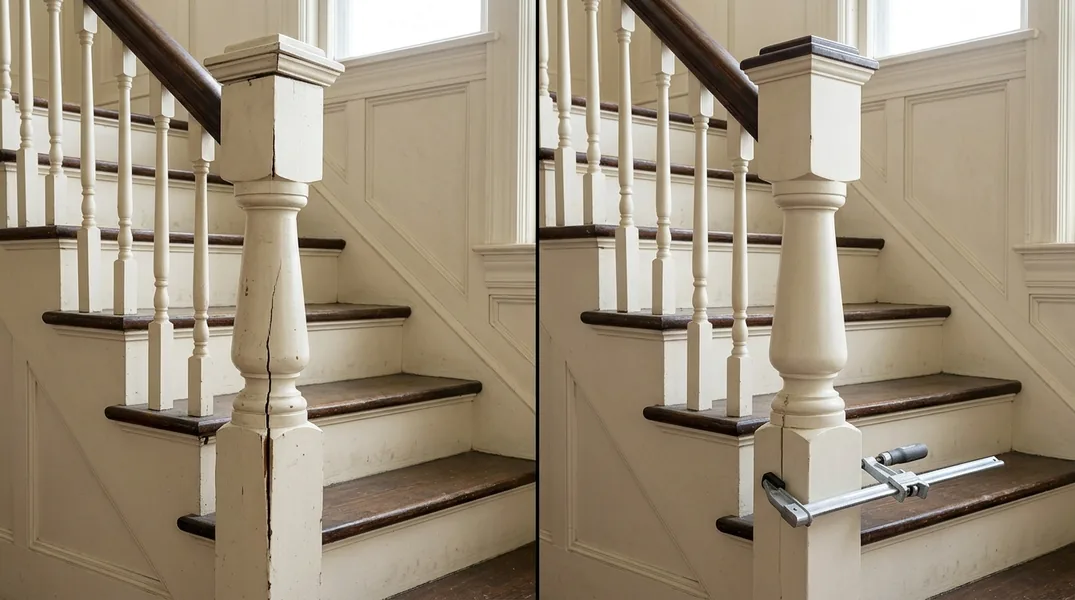
We also handle interior door installation and repair, cabinet and vanity installation, and stair and railing repair. The craft is in the details: consistent spacing, joints that fit tight, and finishes that look like they belong in the house.
Permits, Repair-or-Replace & What We Do Not Do
Permits and the repair-or-replace decision are two separate things, though they often come up together. In most jurisdictions, a permit is commonly required for structural work such as removing or altering a load-bearing wall, replacing beams or joists, or altering stairs or exterior decks. Requirements and thresholds vary by location. Before starting any project, always verify with the Tacoma building department what permits apply to your work. We can help document the damage for an insurance claim if that is relevant to your situation, though we cannot predict whether a claim will be approved or what your policy will cover. The decision to repair or replace a damaged wood member comes down to three things: how much sound section is left, whether the water source that caused the damage can be closed, and how the cost of repair compares to replacement. We quote both options when both are real, and we explain the trade-offs plainly. We are fully insured and EPA Lead-Safe Certified. We do not offer structural engineering services, engineered drawings, or load calculations, and we do not provide termite treatment, fumigation, or pest control. Those are separate regulated trades. If you have questions about what your project requires, we can help you think through it, but the building department has the final say. Requirements vary, so always verify with the Tacoma building department before starting your project.
Ready to get started? Contact us for a free estimate and we will walk through what we find and what it will take to fix it.